
Sedo
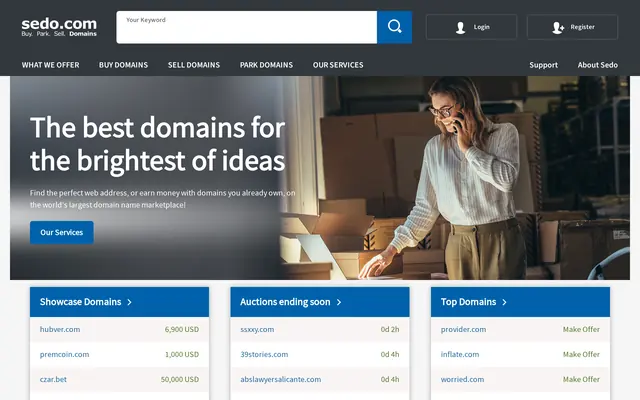
sedo.comSedo is a Cologne-based domain marketplace where owners list names for free and pay a 10, 15 or 20% commission when they sell. Adult domains must sit in an adult category, which search results include by default.
Selling a domain name means finding a buyer, agreeing on a price, then getting paid and handing over the name without either side carrying the other’s risk. Adult domains have fewer outlets, since some mainstream platforms refuse industry extensions and many buyers shop through specialist marketplaces, brokers and forums. The services on this page cover each step, from listing to escrow. They differ in who may list, what they charge and how much of the payment and transfer they handle.
Pages checked on October 5, 2026
Tag:
Show allSedo is a Cologne-based domain marketplace where owners list names for free and pay a 10, 15 or 20% commission when they sell. Adult domains must sit in an adult category, which search results include by default.

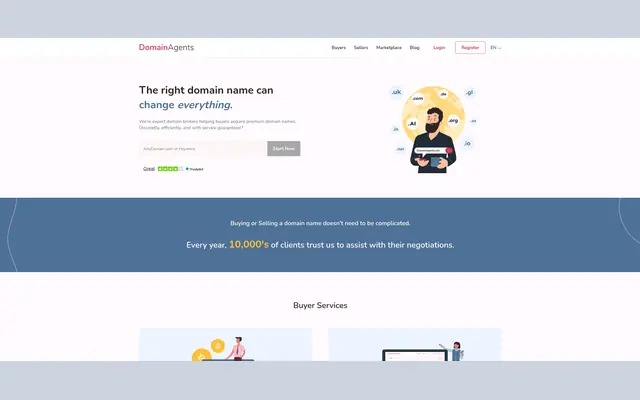
DomainAgents, an Ontario company running since 2012, will put your offer to the owner of any registered domain, listed or not, for $19.95. On negotiated sales the buyer also pays the commission, 10% up to $25,000, and the seller pays nothing. Payment runs through Escrow.com.

Broker.xxx is an adult website, domain and business broker founded by Jay Vee, CEO of JuicyAds. Sellers pay only on a sale: 10% up to $1,000,000 and 5% above. Escrow is free up to $100,000 for deals that start on its marketplace.

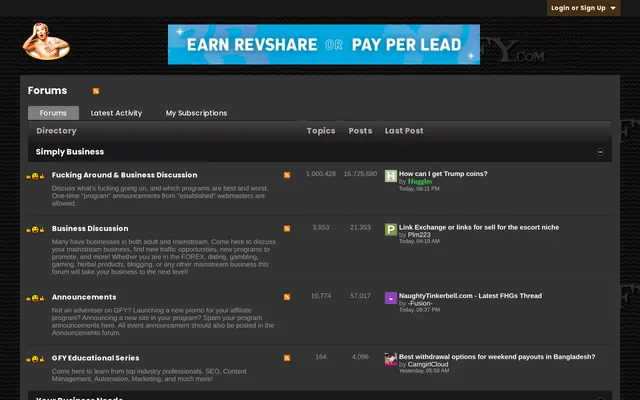
Business discussions on GFY can connect the seller and buyer of an adult domain without arranging the agreement, payment or transfer for them.

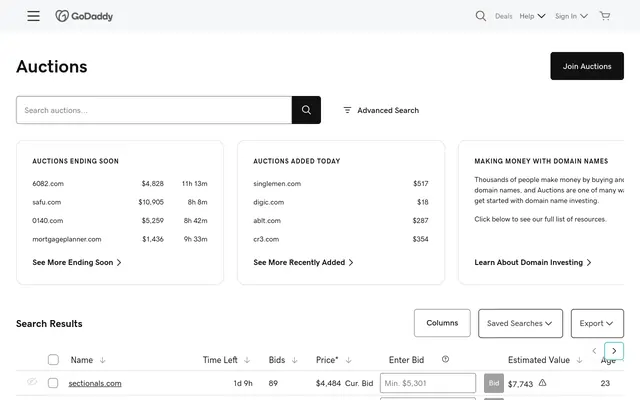
GoDaddy Auctions offers expired-domain inventory to buy, with no seller submission route confirmed in the reviewed pages, and excludes .adult, .porn and .sex.

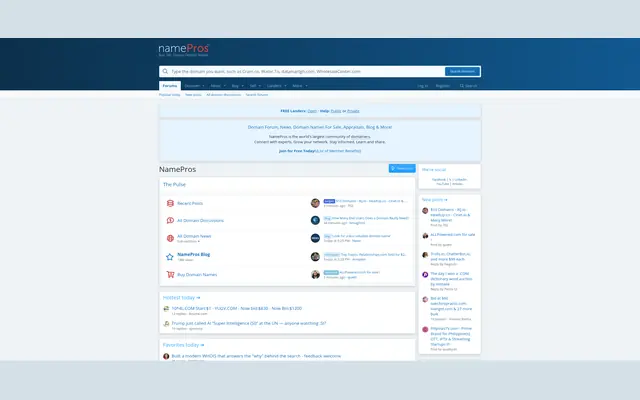
NamePros is a domain name forum running since 2003. Registered members get a four-section adult marketplace, where adult domains have drawn 509K views and adult websites 196K. A free account keeps two listings live at once, and NamePros takes no commission on sales.

DNForum is a domain name forum founded in 2001 where you can sell domains and websites for free, with no commission. It has a section for adult domains, but provides no escrow and no checks on listings.

HugeDomains sells its own catalogue at displayed prices and does not let individuals list their domains for sale there.

WebsiteBroker is a California classifieds site, running since 1997, where you list a website or domain for $9.95 per 90 days and pay no commission when it sells. It has an adult category, but the whole catalog holds two websites, one of them adult.

WJunction offers domain listings, leaving the parties responsible for checks, payment and transfer without documented integrated escrow.

AdultDomains.co is the sales front of Domainium, which sells the cam affiliate networks it built itself: fifteen bundles and more than 1,600 .com and .cam domains, mostly in gay and male cam niches. No prices are published, traffic data comes under NDA, and every sale closes through Escrow.com.

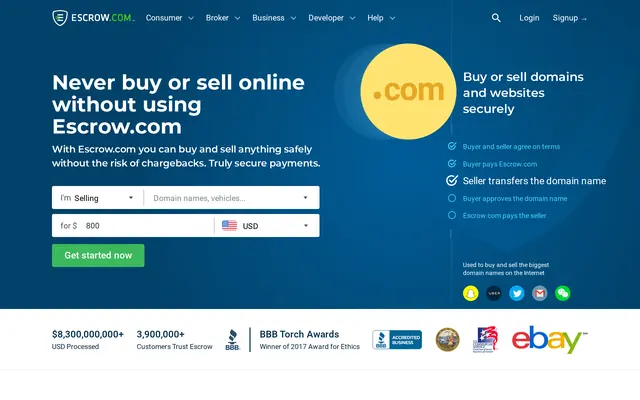
Escrow.com is a California-licensed escrow service, founded in 1999, that holds the buyer’s money until the website or domain is delivered. It does not find buyers. Fees start at 2.6% up to $5,000, with a $50 minimum.
A domain is worth what a specific buyer will pay for it. That figure depends on what the name lets someone do, whether building a brand, catching type-in traffic or ranking for a commercial query. Automated appraisals from registrars and marketplaces produce a ballpark based on length, extension and the words used. They know nothing about the buyer’s plans, and two tools often return very different amounts for the same name.
The .com is still the default for international buyers, country extensions mostly sell within their own market, and industry extensions such as .xxx, .porn, .sex or .adult reach a narrower pool. A short name that is easy to spell and has no hyphen gets remembered and typed correctly. A keyword with strong commercial value, like a popular niche or content type, draws tube operators and affiliates.
A domain that once hosted a site can carry direct traffic, backlinks and age that SEO-minded buyers look for. It can also carry a Google penalty, toxic links or a spot on blocklists. The Internet Archive’s Wayback Machine and a backlink checker reveal what the name used to host, and a serious buyer checks both before making an offer.
Comparable sales are the usual benchmark. Public databases log the deals that marketplaces report, and a similar name in the same extension that sold recently gives a tighter price range than any automated appraisal.
Names that use a registered trademark, such as a studio brand, or a performer’s stage name are hard to sell. The rights holder can have the domain transferred through a domain dispute procedure without paying the current owner.
A domain marketplace publishes the listing, collects offers, takes the buyer’s payment and runs the transfer, keeping a commission on the price. Sedo, a German marketplace, works this way. Listing is free, ownership is proven through Whois or a code set at the registrar, and the commission depends on the channel that brought the buyer in. Its SedoMLS network also shows the listing at partner registrars, where the name can be bought instantly, and adult names have their own category there.
Registrars run their own auctions too, and many let customers list names already held in their account. Some of these platforms ban adult extensions such as .porn, .sex or .adult, so read the listing rules before posting.
A domain broker looks for the buyer on the seller’s behalf. The broker picks which names to take on, pitches them to companies likely to want them and earns a success fee. Brokerage mostly suits premium names whose potential buyers are few and can be approached one by one.
Adult webmaster forums and domainer forums have their own sales threads. Sellers meet buyers from the industry there, yet no intermediary holds the money or checks the transfer, and both parties handle everything themselves.
Private sales run through a for-sale page on the domain itself, the Whois contact or a direct approach to a publisher already using a similar name. They avoid commission and leave the contract, collection and transfer to the seller.
A fixed price, often labeled Buy Now, lets the buyer pay without negotiating. The listed amount becomes the sale price on the first click, and this is the format that enables instant purchase at a marketplace’s partner registrars.
Make Offer listings let the buyer name an amount. A hidden minimum screens out lowball bids, and the negotiation continues through the platform’s messaging, which keeps a record of every exchange. Many sellers combine both, with a listed price and the option to offer less.
An auction puts several buyers in competition over a set period. It suits a name that has already drawn offers, and registrars also use auctions to resell expired domains. Without interested buyers in place, an auction can close at the reserve price or with no sale.
Payment plans and lease-to-own deals open a name to buyers who cannot pay in full. The buyer uses the domain while paying installments, and the seller or a trusted third party keeps ownership until the final payment. The agreement should state who controls the nameservers during that period and what happens to the name if payments stop.
The amount you keep comes after the platform’s commission, escrow fees, card or PayPal fees when the seller covers them, and any broker’s cut.
Escrow protects both sides of a domain sale. The buyer pays a third party, the seller transfers the name, the buyer confirms receipt, and only then does the third party release the money. Escrow.com, a US escrow service, follows this sequence without finding buyers: the parties agree on a price first, then open the transaction and decide who pays the fee. Marketplaces apply the same principle through a third-party account they manage.
A transfer takes one of two routes. Between two accounts at the same registrar, the seller pushes the name to the buyer’s account. Between registrars, the seller unlocks the domain and sends the authorization code, which the buyer enters at their own registrar. A domain that was registered or transferred recently stays locked at its registrar for a period set by ICANN rules.
Before handing over the name, the seller moves everything that depends on it: the website, email addresses, affiliate links and ad network accounts tied to the domain. On receipt, the buyer checks that the registration data shows their details and that they control the nameservers.
Scams mostly target sellers. A fake buyer promises a high offer on condition that the name gets appraised by a specific paid valuation site, which pays the scammer a cut. Others point to a clone of a known escrow site, or ask for the authorization code before any payment. Open escrow with a known service at an address typed by hand, and release the code only once the money sits with the third party.
It lists services aimed at people who build adult websites. No pornographic content is hosted here, but the ads shown may be.
Your answer is kept for six months on your device. It is not sent to anyone.