DMCA Takedown Services
A DMCA takedown service finds copies of your videos, photos or text posted without permission and files removal requests on your behalf with platforms, hosting providers and search engines. The DMCA is the Digital Millennium Copyright Act, the US copyright law whose notice and takedown procedure is used by sites far beyond the United States. Studios, paysites and independent creators turn to these services once their scenes spread across tube sites, leak forums and Telegram channels. Providers differ in how they detect copies, which targets they can reach and how they bill each removal.
Pages checked on October 4, 2026
 branditscan.com
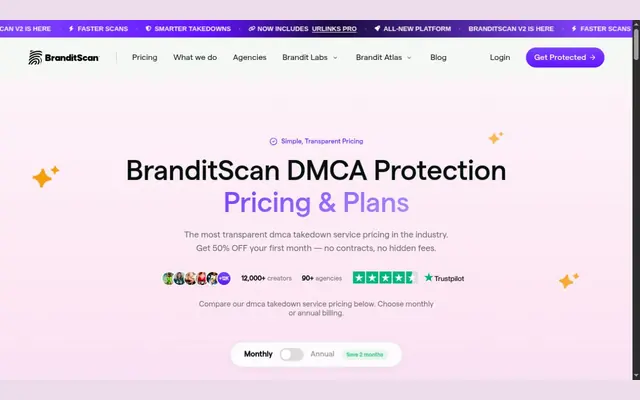
BranditScan is a DMCA takedown service run from Quebec for adult creators, OnlyFans agencies and studios. Premium costs $69 a month and runs hourly scans with facial recognition and automatic takedowns. Google lists 380.9 million URLs reported by the company, 63% of them removed.
Automatic takedownsFacial recognitionGoogle delistingImpersonator removalAgency plansStudio plans
 digiregs.com
DigiRegs is a Canadian anti-piracy service for adult video producers. ContentHunter finds copies through audio and video fingerprints, and RightSecure blocks them before they go live on partner tube sites. The company claims over 13.6 million protected videos but publishes no prices.
Audio and video fingerprintingOn-upload blockingManaged takedownsSearch delistingFor studios
 dmca.com
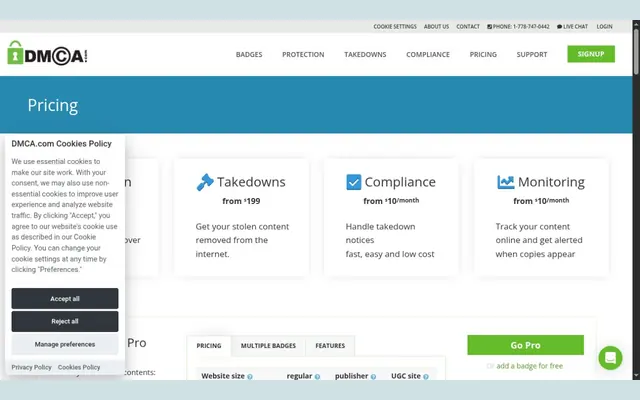
DMCA.com is a Canadian content protection company that has been running since 2006. It charges managed takedowns per target site, from $199 with a refund if the removal fails, sells do-it-yourself takedown tools for $10 a month and handles incoming notices for sites that host user content.
Managed takedownsPay per caseDIY takedownsSearch delistingIncoming notice handlingNon-consensual intimate content
 deletemyleaks.com
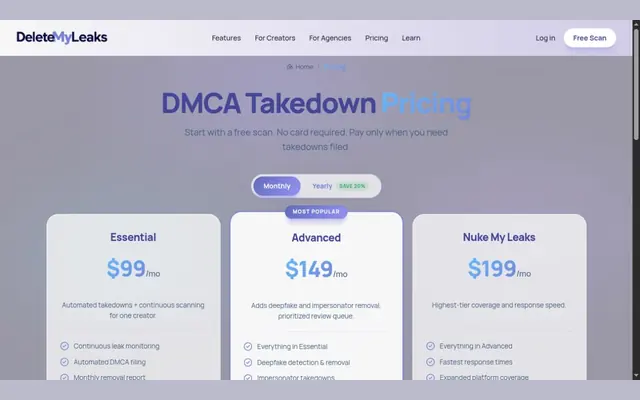
DeleteMyLeaks is a US takedown service for OnlyFans, Fansly and Chaturbate creators, run by Deletemyleaks LLC since 2024. A free scan shows your leaks without a card, and three plans from $99 to $199 a month file DMCA notices that a person checks before they go out.
Free leak scanHuman-reviewed takedownsGoogle and Bing delistingDeepfakesImpersonator removalFaceless creators
 takedownfy.com
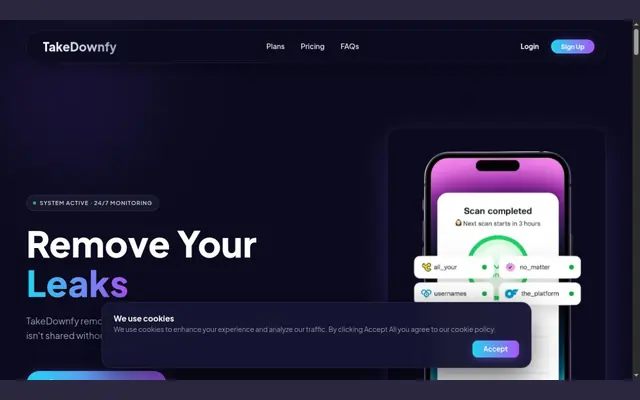
TakeDownfy is a DMCA takedown service for creators and agencies, run by Takedownfy OÜ, an Estonian company registered in March 2026. Plans cost $69, $119 and $199 a month, with scans running weekly, daily or hourly depending on the tier.
Automatic takedownsGoogle and Bing removalFacial recognitionImpersonator removalTelegramAgency plans
 useprivly.com
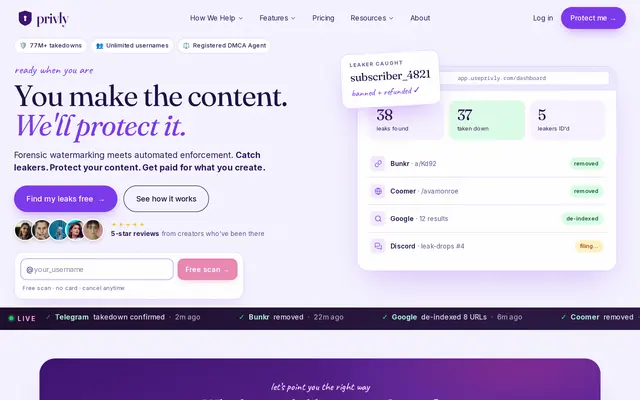
Privly is an Australian leak removal service for OnlyFans, Fansly and Chaturbate creators. One $49 monthly plan bundles scans, unlimited takedowns, Google and Bing delisting and per-subscriber watermarking, and a $499 package handles leaving a platform with a year of monitoring.
Managed takedownsPer-subscriber watermarkingGoogle and Bing delistingTelegram and DiscordPlatform offboardingFree help for abuse victims
 takedownpiracy.com
Takedown Piracy has spent more than 18 years removing pirated adult content, matching videos by digital fingerprint on tube sites, file lockers and torrents and clearing them from Google. Studios get a custom quote, while independent creators sign up to ClipSentry, run by the same team, for $150 a month.
Leak discoveryManaged takedownsSearch delistingFor platforms and studiosFor creators
 cammodelprotection.com
Cam Model Protection is the takedown service of Leakserv B.V., a Dutch company based in Ermelo. Plans cost $169, $269 or $469 a month before VAT, and Google delisting starts on the $269 Superstar plan. Google has removed more than 15 million URLs reported by its account since 2016.
Managed takedownsGoogle delistingTelegramImpersonator removalDeepfakesClient dashboard
 rulta.com
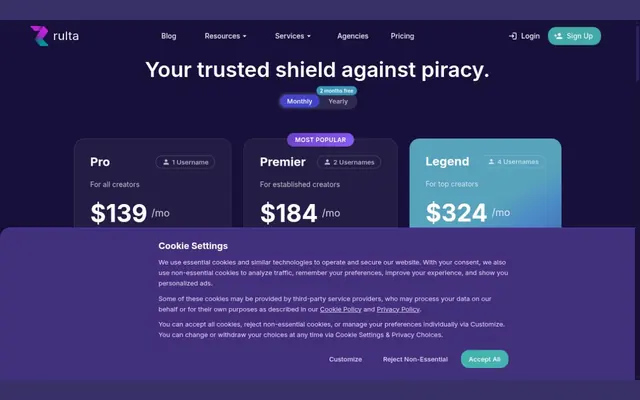
Rulta is an Estonian DMCA takedown service for adult creators, run by Rulta OÜ in Tallinn. Its three plans cost $139, $184 and $324 a month plus VAT, scan every 30 minutes and remove results from Google and Bing. Social media coverage starts on Premier, and Telegram only comes with Legend.
Automatic takedowns30-minute scansGoogle and Bing removalFacial recognitionImpersonator removalTelegram
 takedown.co
Takedown is a takedown service run by Marefeat Ltd, a Belize company, on takedown.co. It charges $39 per stage name a month with seven free days and no card, lets creators keep the clips that bring in subscribers, and offers studios a free audit, an API and a white-label option.
Managed takedownsPromo clips keptGoogle and Bing removalFake account removalAPI and white labelAffiliate program
 breez.dev
Breez Studio is a one-person DMCA takedown service based in Barcelona that has worked for cam models since 2018. Its four plans cost $63 to $172 a month with taxes included, and you can pay in Chaturbate tokens, Paxum or stablecoins. Google has removed over a million URLs reported by its main account.
Managed takedownsFor cam modelsPay with Chaturbate tokensCrypto paymentsPersonal agentTelegram
 onsist.com
Onsist is a Dutch brand protection company founded in 2010 in Ermelo, with a dedicated plan for adult content. Its three tiers cost $199, $249 and $399 a month plus VAT and differ by the number of keywords tracked and the hours of manual searching, from 15 minutes to 3 hours a week.
Managed takedownsManual investigationGoogle, Bing and Yahoo delistingMulti-language coverageDark web add-onFor studios
What a DMCA takedown service is and how it works
A DMCA takedown service is a company that tracks unauthorized copies of protected content and sends the removal notices for the rights holder. The name comes from the Digital Millennium Copyright Act, the US law that governs copyright online. It shields a hosting provider from liability for its customers’ files as long as the provider acts quickly on properly formatted notices. That safe harbor is why a well drafted notice usually gets content removed with no lawsuit and no lawyer involved.
Every case runs through the same steps. The service searches for copies by model name, site name, scene title, reverse image search or video fingerprint. It then works out who controls each URL: the platform displaying the video, the host renting out the server, the search engine indexing the page. It files the notice, follows up when nobody answers and checks that the URL has gone dark.
The process reaches well past US borders. Major platforms, tube sites and many European hosts take complaints through a form modeled on the DMCA, and hosting providers in the European Union must offer a way to report illegal content anyway. A host based in a country that ignores these rules can simply sit on the complaint. Search delisting is the remaining lever against it.
In the adult industry, the targets are studio scenes, photos and clips sold on subscription platforms such as OnlyFans, paysite galleries and sometimes sales copy and promo art. Pirated copies spread through tube sites, leak forums, Telegram channels, torrents and file lockers. They tend to reappear at a fresh URL soon after removal, which turns anti-piracy into ongoing monitoring.
The DMCA takedown notice: contents, recipients and counter notices
A DMCA takedown notice is a written complaint that identifies the protected work, lists the exact URLs where it appears and puts the sender on the record. It includes a description of the work, the infringing URLs, the sender’s contact details, a good faith statement that the use is not authorized, a statement under penalty of perjury that the information is accurate, and a physical or electronic signature. A notice pointing at a homepage or a username instead of specific URLs usually gets rejected.
Yes, you can file a DMCA takedown yourself. Platforms, tube sites and Google all run online forms. US platforms register a designated agent with the Copyright Office, and its public directory shows where to send the notice. For a site with no form, the hosting provider shows up in the WHOIS record of its IP address. When the site sits behind Cloudflare, the visible IP belongs to Cloudflare, which does not store the file. Cloudflare forwards the complaint to the actual host and tells the complainant who that host is.
Google handles requests about its results separately. Delisting removes the URL from search while the file stays online with its host. A copy of each request goes to the public Lumen database, which shows the sender and the work reported. A performer working under a stage name can use an agent to keep a legal name out of that archive.
Whoever posted the content can push back with a counter notice if they believe they had the right to use it. The host then restores the file after a statutory waiting period unless the rights holder files suit. Pirates rarely bother, because a counter notice requires their name and address. It comes up mostly in licensing disputes and arguments over clips.
DIY DMCA takedowns versus a managed takedown service
Filing your own notice works fine for a one-off leak on a known site. The workload shifts once a full catalog is spread across many sites that repost every new release as soon as it drops. A managed takedown service then brings continuous scanning, notice templates tuned to each recipient and someone to chase the follow-ups.
Keyword search on model names, site names or scene titles catches pages that repeat those words in a title or description. Reverse image search and facial recognition pick up renamed photos. Video fingerprinting compares the footage itself and flags a scene that has been cropped, trimmed or re-encoded. DigiRegs, for instance, relies on audio and video fingerprints and can block certain copies at upload on partner tube sites before they go live.
A provider that works in adult knows the abuse contacts at tube sites and file lockers, the reporting forms of each social network and which hosts actually respond. Several large tube sites run their own fingerprint filtering, fed by reference files supplied by rights holders, and a service familiar with those channels can register a catalog there.
No provider can scrub a leak from the entire internet. Hosts that ignore notices keep the files, private channels stay out of reach of scanners, and a removed video can come back through another account. Delisting from Google and Bing then cuts the reach of those copies for anyone searching a model or site name.
How much a DMCA takedown service costs and what to check before you sign up
A DMCA takedown service charges per case, by monthly subscription or against a quota of removals. A case covers one specific problem, such as a site copying your content, handled by the provider’s staff. A subscription pays for ongoing monitoring and the notices it generates, with tiers based on the number of protected names, how often scans run and which platforms are covered. DMCA.com, for example, prices its managed takedowns per site and sells a do it yourself toolkit on a monthly plan.
Providers count a takedown in different ways. One counts a removed URL, another a notice sent, a third a whole site handled. A large number of notices sent tells you little about how many files actually went offline.
The report you get should list every URL, the recipient of each notice, the date it was sent and the outcome: still live, removed or delisted. Coverage has to include the places where your content actually leaks, whether that means Telegram, leak forums or file lockers. Get your proof of rights ready before you sign up: model releases, distribution licenses and original files. A false notice exposes the person who signs it, and a careful provider asks for these documents before sending anything.
A removal guarantee comes with conditions that usually limit the cases it covers. At DMCA.com, refunds apply only to Standard cases. Privacy matters too: a performer who wants their legal name kept out of notices should pick a service that signs them under its own agent name.