Adult Age Verification
Age verification is now a legal requirement for adult websites with visitors in the UK, France and a growing list of US states, and each jurisdiction sets its own bar. The providers listed here check that a visitor is an adult on the site’s behalf and send back a single answer, over the threshold or not. They differ in the methods they support, from facial age estimation to ID documents, bank checks and mobile carriers, in the countries where regulators accept their checks, in the data they keep and in what exactly they bill for.
Pages checked on October 5, 2026
 agechecked.com
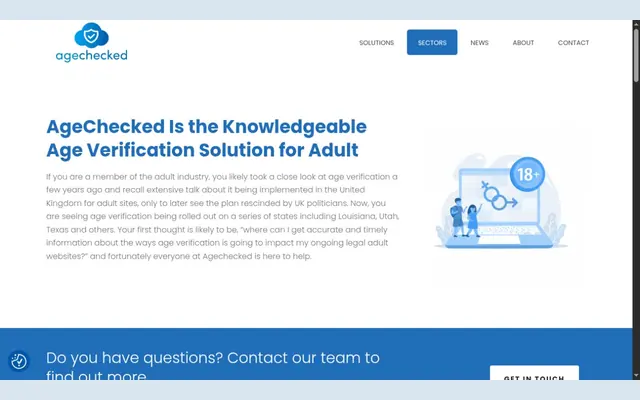
AgeChecked is a London age verification company, incorporated in 2016, that checks paysite members in the background while they pay. Its only public price covers the WooCommerce plugin, £40 a month for 100 checks, and the people who reviewed it on Trustpilot give it 2.1 out of 5.
Payment cardData-based verificationFacial age estimationIdentity documentReusable age proofCMS extension
 bluecheck.me
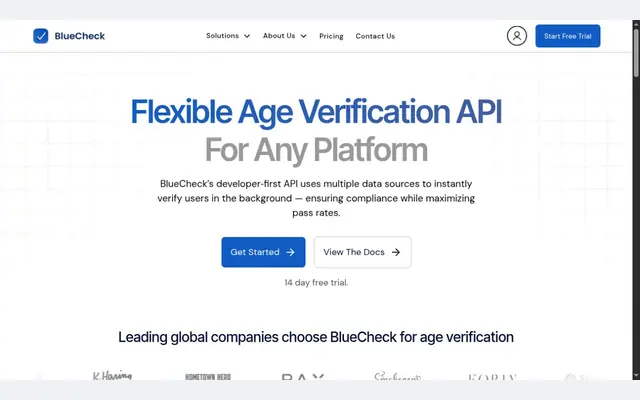
BlueCheck is an Austin, Texas age verification company founded in 2014. It confirms a US member’s age from their address, phone number or last four SSN digits without a camera, charges $0.25 to $0.50 per successful check and plugs into the NATS join page.
Data-based verificationIdentity documentMulti-method journeyAPICMS extensionPublic pricing
 sumsub.com
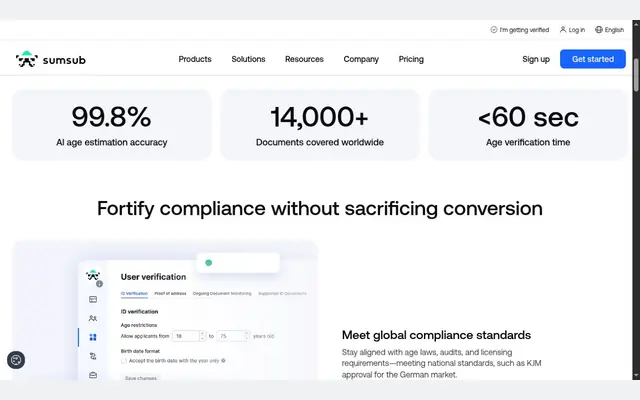
Sumsub is a London identity verification company founded in 2015 and best known in fintech, crypto and gambling. It checks age with selfie estimation and ID documents, publishes $1.35 per verification with a $149 monthly minimum, and lists adult content among the sectors it serves.
Facial age estimationIdentity documentData-based verificationMulti-method journeyAPIPublic pricing
 ageverif.com
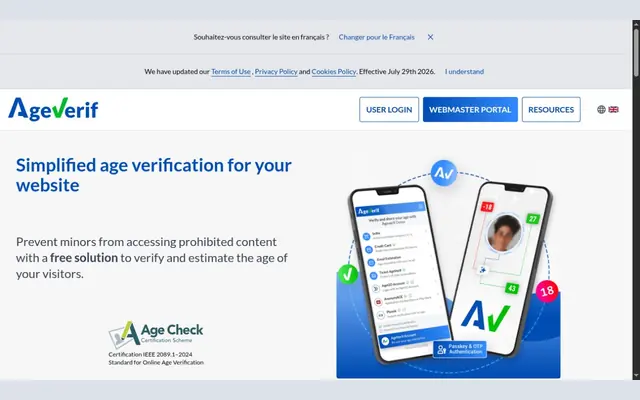
AgeVerif is an age verification checker run by PlanetSeason, a company based in Funchal, Portugal. Sites pay nothing for nine of its eleven methods and €0.04 or €0.015 for the other two, and US visitors can choose between a selfie, a card, PayPal and an email check.
Facial age estimationData-based verificationPayment cardOn-device processingReusable age proofCMS extension
 incode.com
Incode is a San Francisco identity verification company founded in 2015. Its adult offer checks both viewers and creators, starts with a selfie, asks for an ID only near the age threshold and deletes the data within 24 hours. Chaturbate went live with it 5 days after signing.
Facial age estimationIdentity documentDigital identityMulti-method journeyOn-device processingCreator verification
 privately.eu
Privately is a Lausanne, Switzerland company founded in 2014. Its FaceAssure tool estimates a visitor’s age from their face inside the browser or phone, with no image sent anywhere, and is certified under ACCS 1:2025 and ISO/IEC 27566-1. It claims more than a million checks a week.
Facial age estimationOn-device processingReal-person checkIdentity-free responseWeb widgetSDK
 oneid.uk
OneID is a Manchester age and identity verification company registered with the FCA. It confirms a visitor is 18+ through their online banking, with twenty UK banks supported, or their mobile network, with no ID or selfie. It ran 4.5 million checks in five days in July 2025.
Bank dataData-based verificationDigital identityIdentity-free responseAPICMS extension
 verifymy.io
VerifyMy is a London age assurance company launched in 2019. It estimates a visitor’s age from their email address, with no camera or ID, a method the ACCS rated highly effective. Its published rate runs from £1 to £0.80 per successful check, with exclusivity and a 12-month term.
Data-based verificationFacial age estimationIdentity documentPayment cardPublic pricingCreator verification
 veratad.com
Veratad is a Teaneck, New Jersey age and identity verification company. It confirms age first from a visitor’s name, address and date of birth, with optional SSN digits, then falls back to an ID document or selfie, and publishes guides to the Louisiana, Utah and Mississippi adult content laws.
Data-based verificationIdentity documentFacial age estimationMulti-method journeyAPISDK
 agego.com
AgeGO is the age verification gateway of Age Verification Technology, a Barcelona company founded in 2018 and part of EXOGROUP, the group behind ExoClick. It claims more than 100 million checks a month, offers UK visitors a selfie or a credit card and US visitors a selfie or an ID, and quotes sites privately in euros.
Facial age estimationIdentity documentPayment cardDigital identityWeb widgetReusable age proof
 jumio.com
Jumio is a Sunnyvale, California identity verification company that claims more than a billion transactions. It verifies age from an ID, a selfie and a liveness check across 5,000+ ID types, adds UK electoral roll and US DMV lookups, and publishes no prices.
Identity documentFacial age estimationReal-person checkData-based verificationAPISDK
 veriff.com
Veriff is an Estonian identity verification company founded in Tallinn in 2015. Its age assurance runs database checks, then a selfie age estimate, then an ID, and targets the UK Online Safety Act and US state laws. Self-serve ID plans cost $0.80 to $1.89 per verification.
Data-based verificationFacial age estimationIdentity documentMulti-method journeySDKPublic pricing
 yoti.com
Yoti is a London digital identity company offering adult sites eleven age check methods, from a one-second selfie estimate to a credit card check. It says Ofcom recognises its key methods as highly effective, but per-check prices are only on quote.
Facial age estimationIdentity documentDigital identityPayment cardReusable age proofIdentity-free response
 ondato.com
Ondato is a London-headquartered identity verification company with its tech team in Vilnius. OnlyFans has used it since 2020. Its age verification costs €0.30 to €0.01 per completed check, starts with a selfie and only asks for an ID when the estimate is not conclusive.
Facial age estimationIdentity documentReusable age proofWeb widgetAPIPublic pricing
What age verification means, and how it differs from age estimation
Age verification is the process of confirming that a user has reached the required age before they can reach content, a product or a service. On an adult website the threshold is the age of majority, and the check sits in front of the first explicit image. The site only needs a yes or no. Name, date of birth and address are unnecessary for that decision.
Regulators split the field into two families. Age verification in the strict sense matches the user against an authoritative source such as a passport or driving licence, a bank account, a mobile contract or a government digital ID. Age estimation infers a likely age from a signal, usually a selfie scored by a model trained on faces, sometimes the history of an email address. An estimate has no date of birth behind it and comes with a margin of error, so providers set a challenge age well above the legal threshold and send anyone who lands too close to it towards a document or bank check.
Ofcom uses age assurance as the umbrella term for both families. French regulators Arcom and CNIL use a single phrase for the whole field, and Arcom’s technical standard accepts estimation and verification alike as long as the method is reliable and protects privacy.
The classic checkbox where visitors declare they are adults no longer satisfies the countries that have legislated. Ofcom rules it out explicitly, along with an adults-only clause in the terms of service and a payment taken without checking the payer’s age.
Age verification methods and how each one works
Facial age estimation asks the visitor to look into a phone or laptop camera for a few seconds. A model estimates their age and runs a liveness check to confirm a real person is in front of the lens. There is no document to upload and the answer is almost instant. Accuracy drops for young adults, and the challenge age pushes many of them towards a second method.
ID document matching comes from the know your customer checks used in banking. The visitor photographs a passport or driving licence, the provider reads the date of birth, tests whether the document is genuine and compares the photo on it with a live selfie. The result is robust, and many adult site visitors balk at handing over a passport.
Bank-based checks rely on the visitor’s online banking, which confirms they are an adult without sharing transactions. OneID works this way in the UK: the visitor approves the request in their banking app with no selfie or ID, and the site receives an adult confirmation. The method requires an account at a bank the provider supports.
Other sources count as proof too. UK banks only issue credit cards to adults, which makes a credit card check meaningful, while a debit card proves nothing because minors hold them. A mobile network operator can confirm that the line no longer carries the content filter applied to minors by default. Digital identity apps and wallets release an over-age attribute without the name attached. Email-based age estimation infers age from the banks, utilities and other services where the address has been used.
Reusable age tokens save visitors from repeating the check on every site. After a first verification, a token stored in the browser or an app lets them into other sites that use the same provider. Yoti offers reusable tokens alongside facial estimation, ID documents and card checks.
Most adult sites switch on several methods because no single one covers every visitor. A common order is facial estimation first, with an ID document or a bank check as the fallback for anyone the estimate cannot clear.
Age verification laws for adult websites in the UK, US and EU
In the United Kingdom, the Online Safety Act requires every service that makes pornography available to UK users to use age assurance that Ofcom calls highly effective. The regulator names the methods capable of meeting that bar: facial age estimation, open banking, mobile network operator checks, credit card checks, digital identity services, photo ID matching and email-based age estimation. Fines are calculated on the service’s worldwide revenue, and Ofcom can ask a court to order payment providers and ad networks to stop working with a site that ignores the rules.
The United States has no federal law. A growing group of states, starting with Louisiana, require age verification on sites where a substantial share of the material is deemed harmful to minors, and several of these laws let parents sue on top of enforcement by the state. The Supreme Court upheld the Texas statute in Free Speech Coalition v. Paxton. Aylo, the company behind Pornhub, responded by blocking access from many of these states. The Free Speech Coalition keeps a tracker of the bills and laws in force.
In France, the law known as SREN handed enforcement to Arcom, which published a technical standard written with the data protection authority CNIL. The standard sets reliability and privacy requirements and makes every site offer at least one double-blind method. A site that fails receives a formal notice, after which Arcom can have internet providers block it, have search engines delist it and impose a fine.
Across the European Union, the Digital Services Act requires platforms that minors can reach to ensure a high level of protection, and the Commission’s guidelines point to age verification as the expected measure for pornographic content. The Commission has also built an age verification app, piloted first in a handful of countries including France and Spain, that passes proof of majority without identity and is meant to feed into the European digital identity wallets.
These laws follow the visitor. The UK act covers any site reachable from the UK, and each US statute covers users in its own state. This page is no substitute for a lawyer.
Privacy, double-blind checks and choosing an age verification provider
Double-blind age verification means the provider never learns which site the user is visiting and the site never learns who the user is. The provider issues a proof of age, a signed token for example, which the visitor then presents to the site. CNIL recommends the approach and Arcom has made it a mandatory option in France.
The privacy stakes are concrete. A database linking real identities to adult site visits would be an obvious target for extortion after a breach. Data protection authorities therefore push for checks run by an independent third party, with the site never collecting ID itself and the verification data deleted as soon as the result is known. Retention varies by data type within the same provider: a selfie image may be discarded at once while the check result is kept for months as evidence of compliance.
Choosing a provider starts with where the traffic comes from. France needs a double-blind route, the UK needs a method Ofcom treats as highly effective, and each US state sets the methods it accepts. Several providers apply thresholds and session lengths country by country, which keeps those rules out of the site’s own code.
The result returned. A plain pass or fail protects the site better than a date of birth or a copy of an ID, which it would then have to secure.
The pass rate. Every adult who fails or gives up is a lost visit. A fallback method recovers the visitors the primary method cannot clear.
The billing event. Some providers charge per successful check, some per attempt, some by subscription, and a few let the visitor pay for certain methods.
The integration. A pasted script, a WordPress or Shopify plugin, an API or a mobile SDK each take different amounts of work, and the length of a verified session decides how often a returning visitor goes through the check again.
Certification. In the UK, a provider certified under the government’s digital identity trust framework or by a specialist audit scheme gives the site evidence it can show the regulator.