Adult Crypto Payments
An adult crypto payment gateway lets a site take money without relying on card networks that can turn its business away. Buyers pay from their own wallet, a confirmed transaction cannot be charged back, and the funds land with you or with the gateway depending on the service. What separates these services is who holds the money, how it turns into dollars or euros, whether subscriptions renew, and how much of the technical work stays on your side.
Pages checked on October 5, 2026
 cryptowoo.com
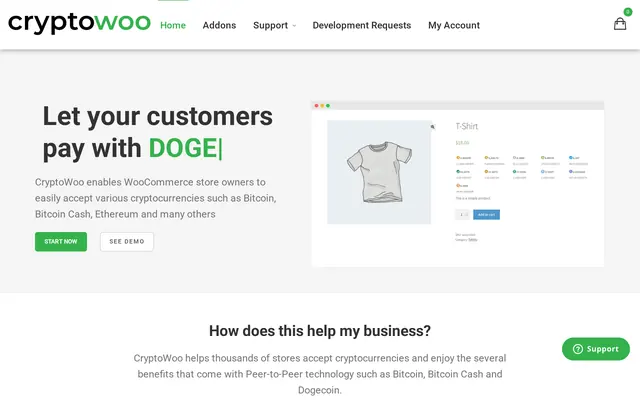
CryptoWoo is a WooCommerce plugin that lets shoppers pay in crypto and sends each payment straight to the merchant’s wallet, with no middleman. The core is free, the useful add-ons are paid, and the publisher is a Norwegian company.
WooCommerce pluginNo middlemanFree corePaid add-ons
 plisio.net
Plisio is a hosted crypto payment gateway that lists adult among the industries it serves. It charges 0.5% per payment with no setup or monthly fee, but sets a $1.50 minimum fee on USDT over Tron and charges 1% on BNB Smart Chain stablecoins.
Adult listedNo monthly feeMass payoutsE-commerce plugins
 nowpayments.io
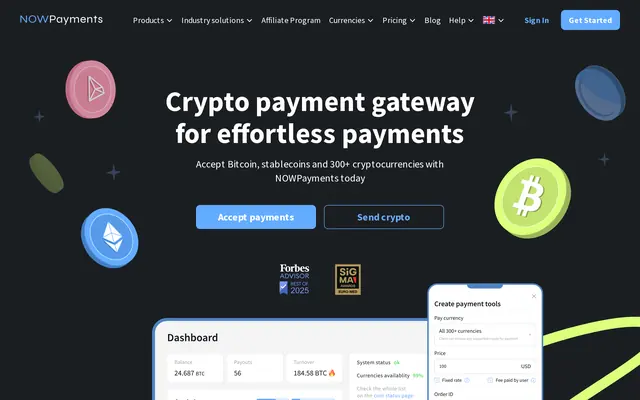
NOWPayments is a crypto payment gateway launched in 2019 by the ChangeNOW team and run by FD Transfers LLC in St. Vincent and the Grenadines. It charges 1% per payment, or 1.5% with conversion, accepts 350+ assets and does not serve the US, the UK or the EU.
Fiat settlementCustody optionalMass payoutsCard payments
 monocrypt.pro
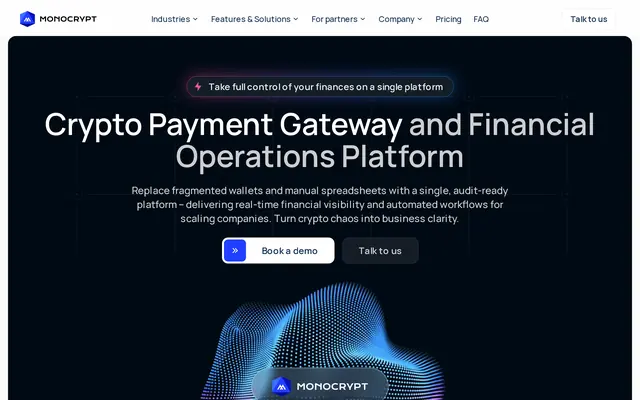
Monocrypt is a crypto finance platform for businesses, with a page dedicated to the adult industry. It takes payments, pays models in bulk and keeps the books. Entry is free with 0.5% on income, but no company and no terms are published.
Batch payoutsTeam rolesMonthly plans
 nadifin.com
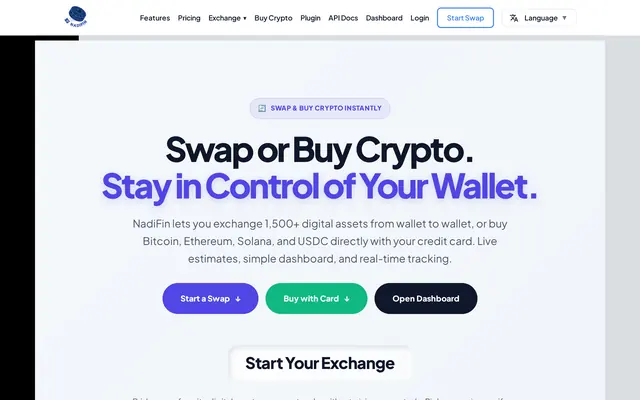
NadiFin is now a wallet-to-wallet crypto exchange with card purchases. Its merchant gateway goes by GrineoPay: 0.5% per payment, no custody and no KYC.
Non-custodialNo KYCNow GrineoPay
 gourl.io
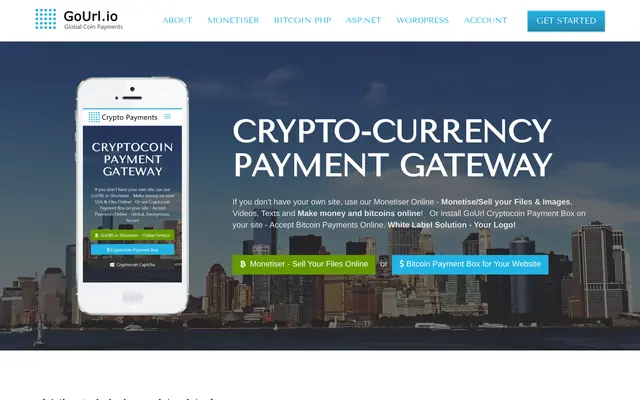
GoUrl is a bitcoin and altcoin payment gateway with no setup or monthly fee. It takes 1.5% per payment and forwards funds to the merchant’s wallet within 30 minutes.
Open sourcePay-per-viewNo buyer sign-up
 bithide.io
BitHide sells a business crypto wallet that the merchant installs on its own server, with a payment gateway, mass payouts and AML screening. The licence is paid once, in crypto, at a price the site does not publish.
Self-hostedNon-custodialMass payoutsAML screening
 blacknosepay.com
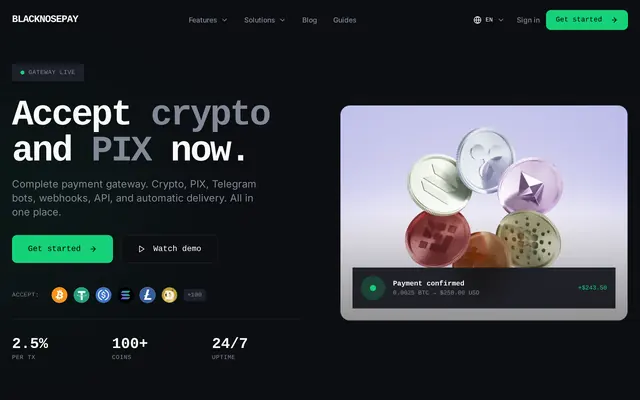
BlackNosePay is a hosted gateway that takes crypto payments, plus PIX for Brazil. It charges 2.5% plus $0.20 per crypto payment and holds funds in a balance until withdrawal.
Published feesPIX for BrazilTelegram bots
 mycryptocheckout.com
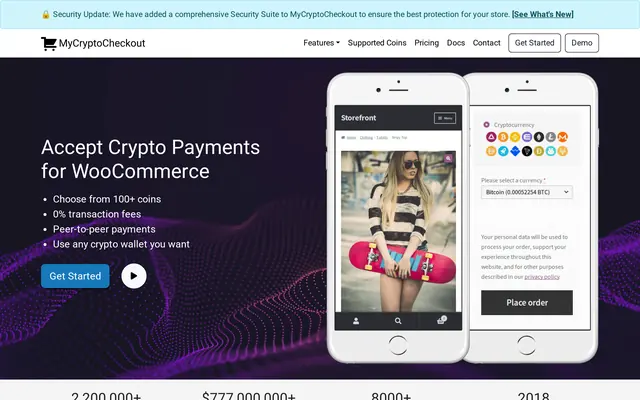
MyCryptoCheckout is a WordPress plugin that takes crypto payments on WooCommerce and Easy Digital Downloads, straight to the merchant’s wallet. It charges no fees: 5 sales a month are free, then the licence costs $79 a year.
WooCommerce pluginZero feesNo KYC100+ coins
 inqud.com
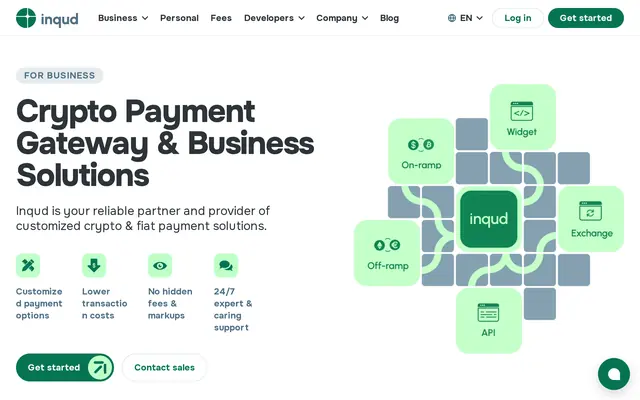
Inqud is a crypto payment gateway that settles in crypto or euros. Its rate card is public: 1% per crypto deposit, falling with volume, with no monthly fee and no reserve. Business verification is mandatory.
Public rate cardEUR settlementNo reserveKYB required
 shkeeper.io
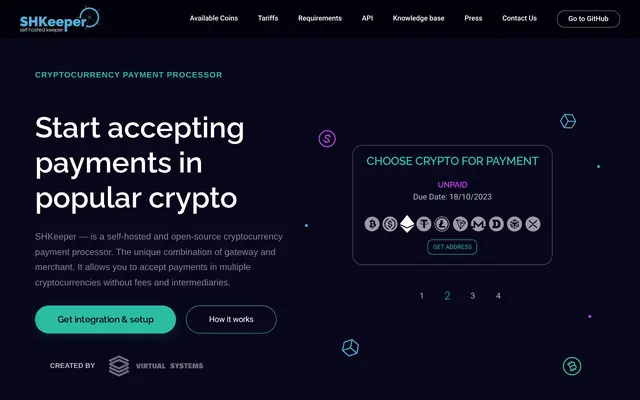
SHKeeper is open-source crypto payment software under the GPL v3 licence that merchants run on their own server. It takes no fees, handles Bitcoin, Lightning, USDT and USDC across many networks, and its Polish developer sells installation and support for $2,000 a year.
Open sourceSelf-hostedNo feesNo KYCLightning
 bitcart.ai
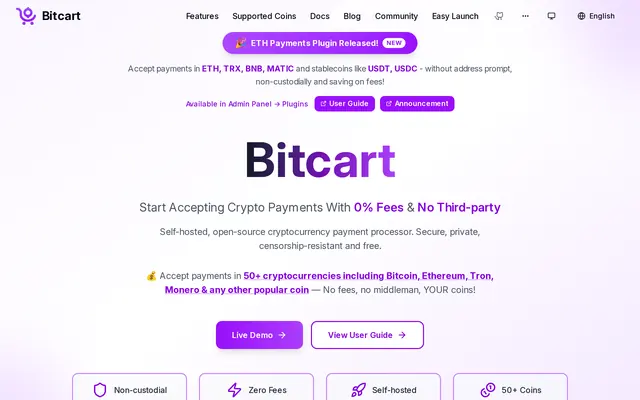
Bitcart is open-source crypto payment software that merchants install on their own server. It takes no fees, never touches the funds and supports ten blockchains, including Bitcoin, Monero and Tron, with 248+ tokens.
Open sourceSelf-hostedZero feesMonero support
 btcpayserver.org
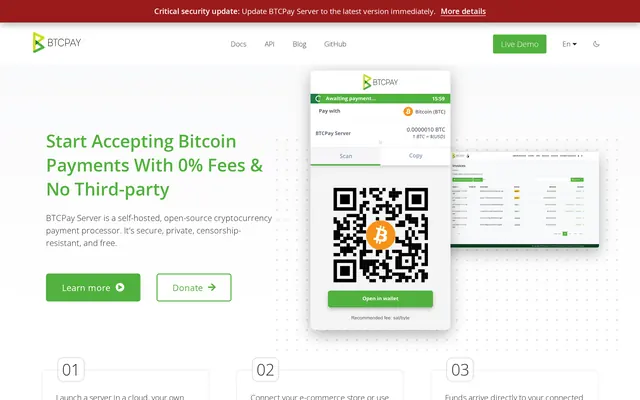
BTCPay Server is free, open-source bitcoin payment software that merchants run on their own server or rent from a host. It takes no fees, and payments land directly in the merchant’s wallet.
Open sourceSelf-hostedZero feesLightning
 atlos.io
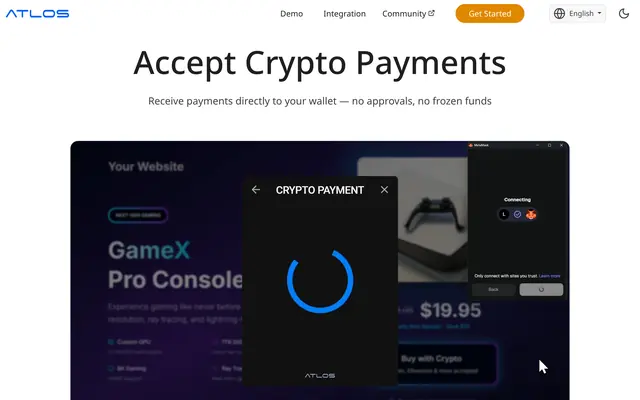
ATLOS is a crypto payment gateway that sends every payment straight to the merchant’s wallet, with no identity checks and no custody. It takes 1% per transaction, pulls subscription payments in crypto and is run by a DAO with no registered office.
No KYCNon-custodialCrypto subscriptionsAffiliate payouts
 xbilling.net
xBilling.Net sells Bitcoin payment processing as a flat subscription rather than a cut of each sale: $24.95 a month on-chain, $49.95 with the Lightning Network. It is run by SCREW Holdings, LLC of Fort Lauderdale, Florida, on a domain registered in October 2025.
Flat monthly feeNo transaction feeLightningBitcoin invoices
 sovrn.ventures
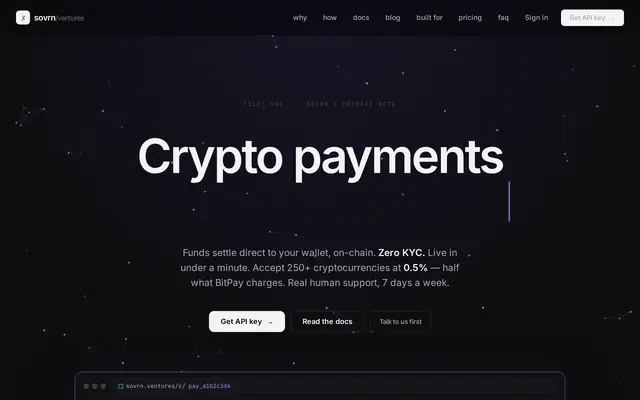
Sovrn is a crypto payment gateway launched in 2025 for businesses card processors turn away, adult creators included. It takes 0.5% of each payment with no identity checks and sends the rest to the merchant’s wallet in the same transaction.
Adult listedNo KYCNon-custodialNo monthly fee
 payram.com
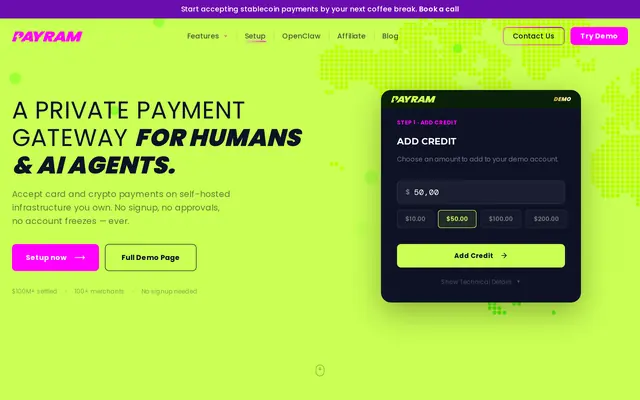
PayRam is crypto payment software that merchants install on their own server, with no signup and no business verification. It takes BTC, ETH, USDT and USDC across five networks, turns Visa and Mastercard payments into stablecoins, and keeps its pricing private.
Self-hostedNo KYCStablecoinsCard to cryptoMass payouts
 apirone.com
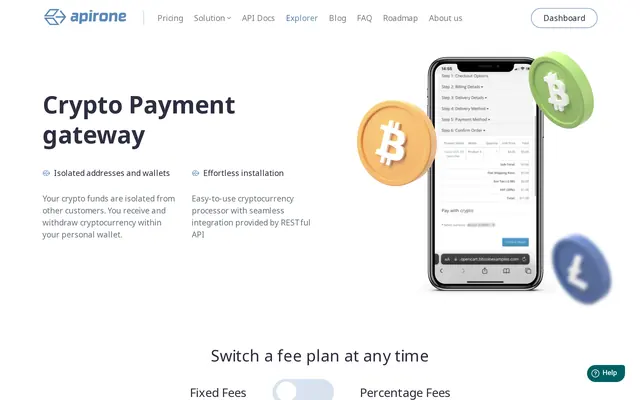
Apirone is an Estonian crypto payment gateway, running since 2017, that receives each payment on a dedicated on-chain address. Incoming payments are free, withdrawals cost 1% or a fixed fee, and nothing is converted to fiat.
On-chainIsolated addressesMass payoutsE-commerce plugins
 coinpal.io
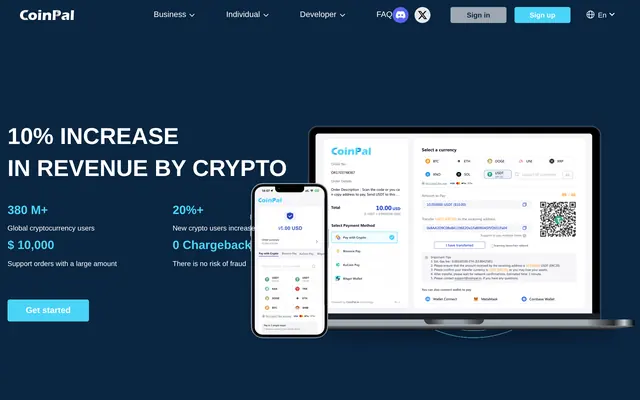
CoinPal is a hosted crypto payment gateway that accepts merchants without a company and features live streaming, dating and chat. It charges 1% per transaction, with no setup or monthly fee.
Individual merchantsDating and live50+ coinsNo monthly fee
How a crypto payment gateway handles an order
A crypto payment gateway turns a checkout into a payment request on a blockchain and tells the site when the money has arrived. At checkout it shows a receiving address and the exact amount due, usually as a QR code, with the exchange rate locked for a short window. The buyer sends the amount from their wallet. The gateway watches the chain, waits for the number of confirmations it considers safe, then marks the order as paid and notifies the store through a webhook or a plugin such as the WooCommerce one.
Every crypto payment is pushed by the buyer. No card number is typed in, no issuing bank can reverse the sale later, and a confirmed transaction is final. For an adult site, that removes chargebacks, which are common on cards when a cardholder disputes a membership and which feed the dispute ratio the acquiring bank monitors.
Card networks treat adult content as high risk. Acquirers that take it on ask for a heavy application, charge higher rates and can hold back a rolling reserve. Mastercard also requires adult content sites to verify the age and consent of everyone who appears on screen. When a merchant account is closed, sales stop overnight, and crypto becomes a backup payment method or, for some sites, the only one.
Paying in crypto requires owning some. Many buyers have never set up a wallet, and some gateways add a card on-ramp at checkout, run by a third party that checks the buyer’s identity. That route brings a card back into the flow, along with part of the screening the site wanted to avoid.
Custodial, non-custodial or self-hosted: who holds the funds
A custodial gateway receives payments on its own addresses and credits a balance in your name. You withdraw later to your wallet or to an exchange. The model makes conversion and mass payouts easier. Between the sale and the withdrawal, though, the provider holds the money and can suspend the account, freeze the balance or ask for documents before releasing it.
A non-custodial gateway sends each payment straight to a wallet whose keys you control. The provider runs the checkout page, the chain monitoring and the notifications, and never keeps a balance. It can still stop serving you, and whatever was already paid stays in your wallet.
Self-hosting removes the provider altogether. BTCPay Server is open source software that the merchant installs on their own server. It takes no commission and has no account to open, so nobody is in a position to refuse the site’s business. Security updates are the merchant’s job, there is no support line to call, and conversion to conventional money happens somewhere else.
With either non-custodial setup, private keys become the weak point. A compromised server or a lost recovery phrase means the money is gone for good. An extended public key lets the server generate receiving addresses without holding the spending key, and a hardware wallet keeps that spending key offline.
Fees, stablecoins and cashing out to fiat
The cost of a crypto payment adds up the gateway commission, the network fee and, where it applies, a conversion fee. The commission is a percentage of each transaction, sometimes lower at higher volume. Network fees go to the miners or validators of the blockchain. They depend on the chain and on congestion, and the gateway passes them to the buyer, the merchant or both depending on its settings.
Bitcoin and ether move in price between the order and the moment you sell. Stablecoins such as USDT and USDC track the US dollar and remove that gap. The same stablecoin runs on several blockchains, and a transfer sent on a network the address does not support can be lost. The checkout page should therefore name the network as well as the coin.
Some gateways convert each payment and wire fiat to a bank account, which requires a verified account with them or with a partner. Others leave the crypto in your wallet, and selling it goes through an exchange with its own identity checks and fees. A bank receiving its first wire from an exchange may ask where the funds came from.
Your accountant needs the fiat value of every payment on the day it arrived, then the gain or loss when it was sold. A transaction export with the rate attached, when the dashboard offers one, saves rebuilding those figures by hand.
Recurring billing, refunds and merchant verification
A membership paid in crypto does not renew by itself in the usual setup. The buyer triggers each payment from their wallet, so the site sends a fresh invoice at every renewal date, by email or inside the members area. Members who forget to pay drop off.
ATLOS advertises automatic subscription debits from the customer’s wallet while staying non-custodial. Before wiring up a feature like this, ask how the customer grants permission, what happens when the wallet is empty on the due date, and how the customer revokes that permission.
A refund is a new transfer from the merchant to an address the buyer provides. It can be calculated in the order currency or in the coin received, and the site’s terms of sale should say which one applies when the rate has moved. A buyer who sends too little, or pays after the rate window expires, leaves a partially paid invoice that the gateway flags and the merchant settles by hand.
Merchant verification depends on the model. Self-hosted software asks for none, because there is no account. Custodial gateways and those paying out in fiat verify the company and its directors and monitor transactions under anti-money laundering rules. In the European Union, the MiCA regulation requires firms that hold crypto assets on behalf of clients to be authorised. A gateway that keeps your funds without any checks at all can freeze a balance the day it changes its policy.
Taking crypto does not exempt a site from age verification of its visitors, which a growing number of US states and countries require from adult sites.