Expired Adult Domains
Expired domains are names their owners failed to renew, and they come back on the market with their backlinks, their history and sometimes some leftover traffic. Adult webmasters buy them to launch a tube, a cam site or a blog on a name that sites in the industry already link to and search engines already know. The services listed here cover the three ways to get one: finding it in a search database, winning it at the auction of the registrar where it expires, or backordering it so a drop catcher grabs it when it is deleted. They differ in the stage of expiration they cover, in what they charge for and in the registrar where the name ends up.
Pages checked on October 2, 2026
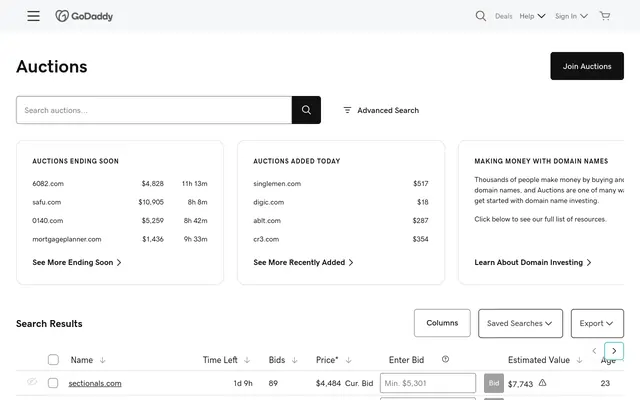
 auctions.godaddy.com
GoDaddy Auctions is where GoDaddy sells expired domains and hosts resale listings. Membership is $4.99 a year, every purchase adds a year of renewal plus the ICANN fee, and among adult extensions only .xxx can be auctioned.
AuctionsExpired domainsBuy nowAPI
 domcop.com
DomCop is an expired domain search engine sold on annual plans from $816 to $4,272, with no free trial. It pulls 3.5 million names for sale from nine marketplaces and drop lists, each with 90+ metrics, but you buy the domains elsewhere.
Search engineSEO metricsDomain crawler
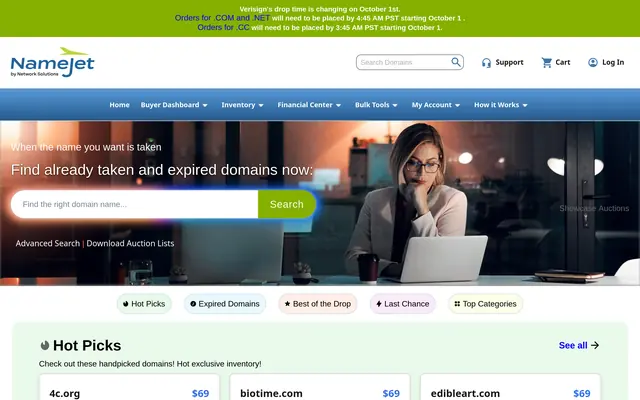
 namejet.com
NameJet takes backorders and runs auctions on domains expiring at partner registrars. Backorders cost nothing to place, the Adult category lists 5,364 names with opening bids of $49 to $79, and a won name lands at a partner registrar you do not pick.
BackordersAuctionsExpired domains
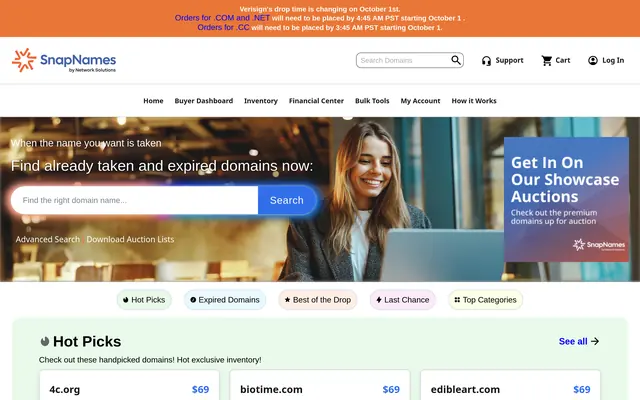
 snapnames.com
SnapNames is the second storefront of a platform it shares with NameJet: one account, the same 5,364 names in the Adult category, the same auctions. Adult names make up 4.6% of its sales, and SnapNames can refuse a domain up to 30 days after you pay.
BackordersAuctionsExpired domains
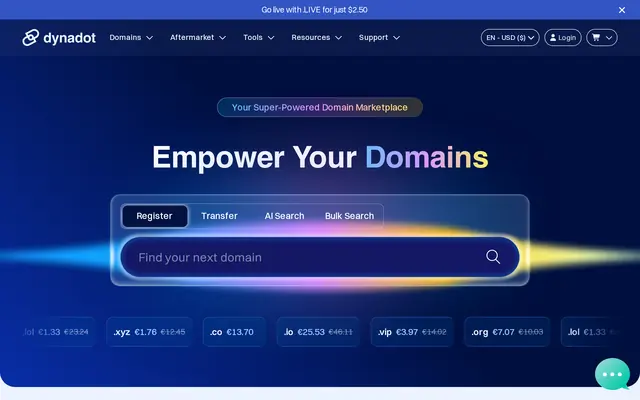
 dynadot.com
Dynadot is a registrar first, and the same account reaches expired domain auctions, backorders, last chance auctions and user listings. Auctions run on proxy bidding and extend by five minutes whenever a bid lands in the closing minutes. Lists filter by age and backlinks and export to CSV. Taking part needs an account and a small balance, with no paid membership.
Free WHOIS privacyCrypto paymentsAdult extensionsAPI
What an expired domain is and how it moves toward deletion
An expired domain is a registered name whose expiration date has passed without the owner paying for renewal. The name stays in the registry after that date. On generic extensions such as .com, .net and .org it goes through a series of stages set by the registry and the registrar, and each stage decides who is allowed to buy it.
During the grace period the domain is still registered to the previous owner, who can renew it at the normal price. The website and email usually stop working, because the registrar points the nameservers to a parking page. Most large registrars auction the name during this window, since they still control it.
The redemption period comes next. The domain is deactivated, only the previous owner can restore it, and the restore fee is much higher than a renewal. Nobody else can buy it at this point.
Pending delete follows. The name can no longer be restored by anyone, and the registry releases it at the end of this stage, at a time drop catching services know in advance. From that moment the first request to reach the registry registers it.
This gives three kinds of names on the market. An expired name is still held by the registrar and may be for sale on its marketplace. A deleted name is released by the registry and fought over by drop catchers. A dropped name that nobody caught is simply available and registers like a new domain.
A WHOIS or RDAP lookup shows the expiration date and the domain status codes. autoRenewPeriod marks the grace period, redemptionPeriod the redemption stage and pendingDelete the final stage before release. Country code extensions such as .uk or .de follow the rules of their own registry, with stages and timing that differ from .com.
Why adult sites buy expired domains
Adult site owners buy expired domains for the links those names earned while they were live. Links placed by other websites stay in place after expiration until their authors remove them, and they point to the new owner as soon as the domain resolves again. Mainstream publications and directories rarely link to adult sites, so organic links are scarce in this industry. A name that adult directories, blogs and partner sites already cite replaces part of the link building a new domain would have to pay for.
Topical relevance matters more than raw link counts. A former gallery site, an old adult link list or a retired dating blog was linked by sites serving the same audience, and search engines read that neighborhood. DomCop files domains under its Adult category when they receive links from sites classified as adult, whatever the domain itself used to publish. Mainstream expired domain lists do the opposite and treat an adult past as a red flag.
A known name also keeps receiving visits after it goes offline, through bookmarks, direct type-ins and clicks on old links. That residual traffic reaches the new site from the day it launches, and it stays useful as long as the new content matches what the old audience came for. Expired domains are also a source of short, memorable names that are no longer available as fresh registrations.
Google has said several times that it does not use domain age as a ranking signal. An aged domain is worth something for the links and indexed pages it built up over those years.
Google's spam policies include a section on expired domain abuse. It covers buying an expired name and repurposing it mainly to rank low value content on the reputation of the previous site, such as affiliate content on a site once run by a government agency or casino content on a former elementary school site. Sites that violate spam policies can rank lower or disappear from results. The definition targets the intent to manipulate rankings with content of little value to users, and buying an expired name is not listed as such. A retired cam site relaunched as a new cam site with original content stays outside that definition. A former charity site stuffed with links to a tube falls inside it.
Private blog networks built on expired domains to send links to a money site fall under another section of the same policies, link spam, which covers links created primarily to manipulate rankings.
How to buy an expired domain: auctions, backorders, hand registration and price
There are three routes to an expired domain, and the stage of expiration decides which one applies.
Registrar auctions cover names still in the grace period. The registrar holding the name lists it on its own marketplace while the previous owner can still renew. GoDaddy Auctions sells the expired names of GoDaddy customers this way. At other registrars, a single account reaches expired domain auctions, backorders and last chance auctions, with proxy bidding and an extension each time a bid lands in the closing minutes. On GoDaddy Auctions a winning bid is cancelled and refunded if the previous owner renews in time, and the sale only becomes final once that window closes. Names that draw no bid move to closeout, where the price drops every day down to a floor.
Backorders cover names in pending delete. A drop catching service fires registration requests at the registry the moment the name is released and only charges when it catches it. When several customers backorder the same name, a private auction settles it among them. The large backorder platforms work this way, sometimes under more than one storefront, and also receive names from partner registrars before the redemption stage. A backorder buys a place in the queue and no claim on the name: the platform may open the domain to a public auction, and the won name is delivered to the registrar that supplied it, which the buyer does not choose.
Hand registration concerns dropped names nobody caught. Any registrar sells them at the standard price of a new domain. The most wanted names are caught the instant they are released, and those left available have often lost their links.
Search tools come before the purchase. DomCop pulls inventory from several marketplaces together with link, traffic and history metrics, then sends you to the platform that holds the name. No domain is sold on DomCop itself. Some backorder platforms display no link metrics, so a name spotted there has to be assessed with an outside tool.
The .xxx, .porn, .adult and .sex extensions are rare on this market. GoDaddy Auctions supports .xxx and none of the other three, and none of the four appears in the DomCop catalog or on the large backorder platforms. Expired domains that suit an adult project are mostly .com, .net and .org names, sorted by topic.
An expired domain is priced by bidding, which means by how many buyers want the same name on the same day. A name without links or traffic goes at the starting bid or in closeout. A short, aged name linked from adult sites and still receiving visits climbs fast once two buyers spot it. Depending on the platform, the winning bid is topped up with a year of renewal, ICANN fees, a yearly membership or the subscription to the search tool.
Expired domain checks to run before you bid
Pull up the domain in the web archive and look through snapshots spread over several years. A name that switched topics repeatedly, sat on a parking page, served as a link farm or hosted an unrelated foreign language site has lost the consistency that gives its links value. For a former adult site, look at what it actually published. A domain tied to illegal content can sit on blocklists run by child protection organizations and enforced by internet providers and search engines.
Review the backlink profile in a link analysis tool. The number of referring domains tells more than the total number of links, and the anchors should describe the old site. Pharma, casino or loan anchors point to a hacked domain or one already used for spam. Authority scores such as Trust Flow, Domain Rating or Domain Authority summarize the volume of links and say nothing about their relevance or about the domain's past.
Search Google with the site: operator. A domain that still has indexed pages is known to the search engine. A domain missing from results while it still receives links may have been deindexed.
Check the name against Google Safe Browsing and the email blocklists. A domain that spread malware or spam can stay listed after it changes hands, and delisting is requested from each list separately.
A name built on a registered trademark can be claimed by the trademark owner, even after a regular purchase at auction.
Work out the full cost before bidding: the bid, the renewal added by the platform, any membership or fees, and the renewals of the following years at the registrar that receives the name.
Plan for the waiting time. On GoDaddy Auctions the won domain stays locked at GoDaddy before it can be transferred out. A backorder platform delivers the name to the registrar that supplied it, where WHOIS privacy is not always offered. An owner who needs to keep their identity out of WHOIS picks the final registrar before bidding and plans the transfer for the end of the lock.